Thursday, May 16, 2013

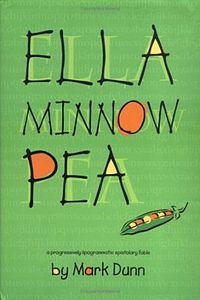
Book #20: Ella Minnow Pea by Mark Dunn

Someone at book club mentioned this book, so I immediately went home and put it on hold at the library. The subtitle of the book is "A progressively lipogrammatic epistolary fable," and if you know what those words mean, it's a pretty good explanation of what the book is. A lipogram is a type of writing game where you try to write a full document while avoiding the use of certain letters--there are whole books written without using the letter E! (I find that wikipedia page really interesting.) So a "progressive lipogram" means that you start by taking out one letter, then another, then another, all the way through the alphabet.

The story goes that there's this island nation that semi-worships letters and the alphabet--or at least they place a very high value on words and letters. The man who invented the sentence "The quick brown fox jumps over the lazy dog" was from there, so they built a statue with that sentence to honor him. One day, the Z falls off the statue, and the leaders of the island decree that it means that they are not allowed to use Z any more--all words that have Z in it are banned. Unfortunately, more and more letters continue to fall off the statue, so their language, which they've prized, becomes more and more constrained and lots of problems happen. The whole book is composed of letters between people on the island, so they have to follow the rules and write in lipograms.

I really like the idea for the story--it's cute and whatnot--but I feel like it kind of stretched my boundaries for belief a little bit. It went way too far--people being banished and killed for slipping up and using the banned letters twice? But besides that, I did not feel like the characters or the action was very well-developed at all. I've read epistolary novels before and really enjoyed them and felt like I connected with the characters, but not at all with this book. I understand that the point of the novel was to focus on the lipograms and not necessarily on the action, but there were way too many storylines and way too many people included in this book that I didn't believe or understand why they were there. For example, Ella, the main character, writes one time that she met a boy named Tom. A few pages later she gets a letter from Tom saying that he thinks she's pretty. Then he disappears and you don't hear anything more about him for the rest of the book when everything's resolved and she's apparently in love with him. What?! That was the dumbest love story ever! I think the whole lipogram idea would have been better served with a different and much less complex narrative around it.

Also, I didn't love how the whole novel basically seemed like a not-very-well-concealed analogy to religion and people blindly following edicts from leaders. It was wayyy to explicit for it to be useful and actually seemed kind of hostile to me. In short, this book sounded really neat, but it fell far short of my expectations and I don't think it was executed as well as it could have been.

Tuesday, May 14, 2013

Book #19: Team of Rivals: The Political Genius of Abraham Lincoln by Doris Kearns Goodwin

I know this may sound weird to say about a 750-page biography, but I could NOT put this book down. I totally neglected everything around here for the last three days while I was trying to power through the rest of this book because I was just so interested in everything happening with Lincoln. And it's not like I didn't know what was going to happen--it's just pretty regular Civil War stuff, which I remember SOME of from high school--but I absolutely loved the insights that Goodwin provides to Lincoln's character and the men that he worked with in his cabinet. I felt like I really got to know him, similar to how I felt after watching Lincoln (which was in part based on the research from this book, and which I definitely want to watch again after reading this).

Goodwin takes the really interesting tack of studying other people in addition to Lincoln in order to give greater insights into Lincoln's personality and achievements, including the men who were his rivals for the Republican nomination for President and who later were members of his cabinet--Seward, Chase, and Bates. The first half of the book talks about each of these men and their histories and their ambitions to become President, all the way up to the election in 1860. I really enjoyed reading about the different men and their different personalities, and seeing how Goodwin compared them at different points. The second half of the book follows (very closely, in much detail) Lincoln's presidency and how he brought together all of these men, and many other people with differing skills and opinions in order to succeed through the Civil War.

Goodwin views Lincoln as a "political genius" (as the subtitle says) and after reading all of her commentary and the evidence she quotes to back it up, it definitely seems like it. Lincoln was incredibly skilled at reading public opinion and waiting until the exact opportune moment to present his opinions or make a move when it was most likely to succeed (like with how he decided to present the Emancipation Proclamation when and how he did). He knew how to use the members of his cabinet to the best of their ability and to ignore their petty faults to focus on the good they were doing in their positions, and he could universally ignore the personal attacks made on him by anyone in order to utilize their skills to save the Union and support him. That was the most amazing thing about Lincoln that came through this book--what an amazing, charitable, "magnanimous" (Goodwin used this word to describe him or his actions about twenty times; she used the word "indefatigable" to describe Seward about thirty-five times) human being Lincoln was. He was incredibly forgiving towards everyone--people that he knew personally who hurt or offended him, soldiers who deserted the Union who he pardoned, and the South as a whole during the plans for Reconstruction. He was welcoming and kind to everyone who came to him as President and he was patient to a ridiculous point with everyone around him. Everyone (at least, everyone who wasn't crazy) who got to know him and worked with him on a close basis became his lasting and loyal friend because of his generosity.

I loved the emphasis Goodwin placed on his storytelling habits and abilities, and on his literary/writing skills. He told stories almost constantly in his conversation to defuse situations, amuse his listeners, and make a point--it was funny because it seemed like no matter where he went, and no matter what age he was, he was always surrounded by a crowd of people listening to his stories. He started telling stories to his friends when he was a kid, entertained young men around the fire in his friend's shop before he was even a lawyer in Springfield, and would lighten the mood while waiting for telegrams with his aides during the War. Also, Goodwin called him "our only poet-president"--can you believe if our leaders wrote their own speeches today? Everyone wrote their own speeches then; men had to be accomplished orators to be successful as politicians.

He definitely wasn't perfect, but it definitely seems like he was the ONLY person who could have helped the nation weather the storms it went through at that time period, and he was the only person who could have gathered the people around him who helped to solve the problems. He definitely seems like probably the only person who could have responded to so many unfair and ill-willed situations with such graciousness and, yes, magnanimity. It's interesting because one reason he is such a huge public figure is because of his assassination, making him a martyr and instantly preserving him as this larger-than-life person, but he really was an incredibly capable and charitable person beyond just his presidency during the Civil War and his assassination.

I tend to have a very cynical opinion about politics and politicians, but this book helped me to see a little bit about what politicians do (or at least what they DID, but I am sure that some of it transfers still, in generalities) and why it is valuable and why it takes skill. I guess if all politicians were like Lincoln, things wouldn't be so bad in this country.


A few other random notes about this book: I was really touched by Goodwin's description of Seward and Lincoln's friendship and Seward's reaction to finding out that Lincoln had been killed. I loved Stanton and hated Chase--he drove me crazy with his lack of responsibility and obnoxiousness. I feel so sorry for Mary Lincoln, even with all of her craziness--I could never go through all of those trials that she went through without partially losing my mind either.
Tuesday, May 7, 2013

Book #18: Someday My Prince Will Come by Jerramy Fine

In my ward book club we had a White Elephant Book Exchange back in December. I opened up this book and then my friend Libby stole it from me. She read it and gave it to me to read after we finished Tess. It only took me about two days, after Tess took me two months (because of all the procrastinating because of how depressing it was). It was the lightest version of a chick-flick book--a super quick read and nothing very substantial about it, so therefore it was fun and easy (exactly what you need after reading Tess of the d'Urbervilles).

Honestly, I almost felt embarrassed while reading this book. Mostly because the author was so unashamedly silly, if that makes sense. The book is a memoir (it's all TRUE) and it's about how she always wanted to be a princess while growing up, was a full-fledged Anglophile and desperately wanted to move to England and marry a prince. And that's what she tries to do throughout the book. And that's all the book is about.

Libby said her favorite part of the book was reading about how English society works and how people get to know each other there (for example, Fine talks about how nobody just introduces themselves to anyone else--you have to be introduced by a mutual friend in order to meet anyone). And I felt the same way; that was really interesting to hear about from a first-person (American) perspective. I also really liked her description of her parents and the crazy things they did (they were hippies--in every true sense of the word). My least favorite part of the book was how she included a bunch of just random stories about her life as she went along on her quest, when they didn't really have anything to do with the overarching narrative of wanting to be a princess. Just silly stories about something her roommates did or something her mom said, like they were meaningful or important enough to include in this book. I feel like it would have been stronger if she would have cut out about 1/4 of the book.

Wednesday, May 1, 2013

Book #17: Tess of the d'Urbervilles by Thomas Hardy

I only read a few books in April, and this book is the reason why. I started it back in March because we were reading it for our ward book club, and I was stuck about halfway through it for weeks, and I kept putting off reading other books because I wanted to finish this one, so I never ended up reading anything! (The other reason I didn't read very much was because I watched every episode of The Office from all the seasons in the last few months.) The reason why I never wanted to keep going with Tess is because of how totally depressing it is. I read a quote (maybe on the Wikipedia page for the book) that this book is "the most depressing book in the English language," and honestly, I would have to agree. Long story short: Tess gets raped, and the rest of her life is ruined from that moment after. She's a "pure woman," as the subtitle of the book says, and she truly wants to be good, but she's scorned and ruined after she's raped when she's 16. It's a terrible story, and probably all too true in far too many societies and centuries. I also hated the description of the story on the back of my book (which I am borrowing from the library): it says that she was "seduced" in a wood and that later she is "torn" between two men (the man who raped her and her eventual husband), but those are ridiculous words to use in this situation. It makes it sound like she had any choice in the matter, but the whole point of the novel is that she didn't.

So in one sense, I hated this book, because it was so freaking sad. I did enjoy reading it, but I hated the story, if that makes any sense. I'm interested to talk about it at our book club meeting tomorrow. And I really am especially glad to have read it now, after the fact--it's another one of those books I always mean to have read, and now I can finally check it off my list.

Tuesday, April 30, 2013

Book #16: The Hobbit by J. R. R. Tolkien

Since I read the LOTR trilogy earlier this year, I wanted to read The Hobbit. But I just plain forgot about it, until I was searching at the library for a book on CD for Tommy and I to listen to on our drive down to Charleston this weekend. This was such a great choice. We both were so hooked we had to spend the last two evenings listening to finish it after we got home from our trip. I read The Hobbit first when I was in high school, and I always loved it, but I had basically forgotten most of the storyline. Tolkien's style of writing seems so friendly in this book, especially when you're listening to it, and it's not quite so descriptive about the surroundings or landscape like I originally thought LOTR was. The action moves fast in this book, and Bilbo is a really great character to become attached to.

We also redboxed the movie (part 1 of 3) while we were in Charleston, because I hadn't seen it yet. It was really, really good. I kind of doubted it because I was bugged that they were turning one book into THREE movies (seems so unnecessary) but the movie was awesome. And we both can't wait for the next two to come out... but unfortunately, we'll have to.

Wednesday, April 3, 2013

Book #15: Writers on Writing, Vol. II (More Collected Essays from the New York Times)

I haven't been reading very much the last few weeks--mainly because I put in an old Season 2 episode of The Office a few weeks ago while I was folding laundry and I got hooked. I'm re-watching all of the seasons now, haha. I feel like revisiting this old TV show is almost like rereading a favorite book--going back to this old story and these old characters that I remember so fondly. (I'll just give my two cents on The Office: the first seasons are so much better.)

But anyway, I have been in the middle of a bunch of books lately, not really progressing on any of them because of my show-watching, but I finally finished this one. I really liked it--I love the meta-ness of reading about writing and how it works and hearing from writers about how they approach what they do. Whenever I read these things, I always feel tempted to write my own novel--I think of a fantastic idea and mull over it for a few days, but the execution still seems way far out of my league. Like it's far too much work for me to really write something and make it GOOD.

But anyway (I keep rambling about random things and needing to get back on track--one reason why it would be hard for me to write something good), I really loved reading these essays. I've read and loved books by a lot of these authors (and then of course I hadn't ever heard of most of them), so it was really neat to hear from them in their own voices. And I always love reading really good writing, which all of these essays were, so that was a treat as well.

I would totally read Volume I of this collection but the library doesn't seem to have it (although it does have Volume II for some reason). I bought this book at the friends of the library sale at NCSU last year, and just now made it through it. Haha. (Although I still have plenty of other books I bought there that I haven't even touched. . . . Oh well.)

Thursday, March 21, 2013

Book #14: The Secret Keeper by Kate Morton

Turns out I'm really a terrible reader for these types of books. I am a HORRIBLY impatient reader--I hate having to wait for the end to figure out what's going on. I almost always skip to the end before I get there, just to make sure everything's going to end up all right. Or sometimes I'll even google it, just in case. Like, I read the afterword to the 7th Harry Potter before I'd finished. Isn't that terrible? I just get so invested in the story that I can't bear to wait and find out what happens until the end. So Kate Morton's style is to have this whole mystery going on, something that happened long ago in the past that someone in the present is trying to unravel, and you find out random answers or parts of the story as you go along but you don't learn it all until the very end of the book (obviously). But I CANNOT handle learning this huge mystery at the beginning and then take 400 pages to get to the end! It drives me crazy! In a good way, I guess, but like I said, I'm really impatient. It forces me to sit down and plow through the book, skimming quickly to get to the end as quick as possible.

I liked The Secret Keeper much better than The Forgotten Garden--although I liked The Forgotten Garden, I felt like there were so many facets to the mystery and so many random things that happened to help the main character discover the truth that it wasn't even believable. This book was much more realistic, I thought, and had a very compelling storyline. I really didn't like the beginning half of the book as much--I really didn't like Dolly's character and was so bugged by everything she did, and how she was being changed. She was so innocent and cute at the beginning, and you want her to stay that way, but I did not like her by the end. But then you feel like you have to because she's the narrator's mom. . . . Anyway, I won't give any spoilers, but things all work out. The second half of the book was much better than the first.

I also really liked how it was set in WWII London--I'd never considered what it was like to live in London during the Blitz. I'd love to read more about that time period.