Showing posts with label science fiction. Show all posts
Showing posts with label science fiction. Show all posts
Saturday, October 15, 2022
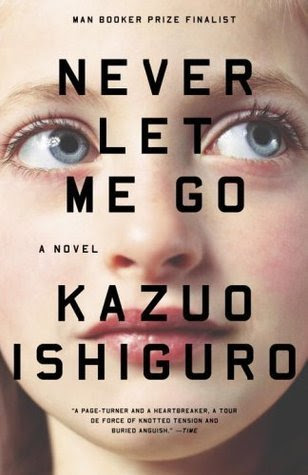
Never Let Me Go by Kazuo Ishiguro

Saturday, July 30, 2022
Cloud Cuckoo Land by Anthony Doerr
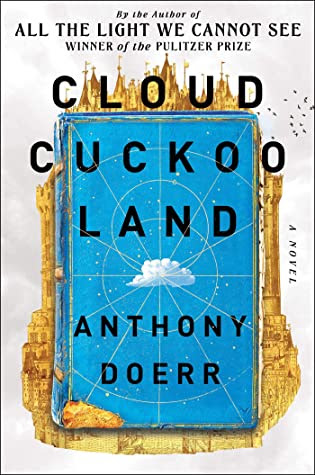
I feel like sometimes with these books that have multiple storylines, there are one or two of them that I am not interested in or that I feel like I am just suffering through to get back to the ones that I like better. But in this book, I actually genuinely enjoyed all of the storylines. There was one character who I liked the least, but since there were five storylines, I felt like I was really excited about what was happening and finding out about each of the characters. I really was invested in Anna and Omeir, the two young kids on opposing sides of the war in Constantinople in 1452, and in Konstance, the teenager stuck on a spaceship hurtling through space, and in Zeno, the old man in 2020 who was translating the Greek story that was the thread that connected all of these disparate characters.
Basically, this book was fantastic. It kept me thinking, it kept me engaged, and it was really well written and beautiful.
Saturday, May 7, 2022
The City We Became by N. K. Jemisin

Friday, March 11, 2022
The Last Cuentista by Donna Barba Higuera

Saturday, November 27, 2021
Klara and the Sun by Kazuo Ishiguro

Saturday, December 19, 2020
Ready Player Two by Ernest Cline

Wednesday, October 7, 2020
When You Reach Me by Rebecca Stead

Wednesday, February 26, 2020
Waking Gods by Sylvain Neuvel

Monday, February 24, 2020
Sleeping Giants by Sylvain Neuvel

Sunday, July 8, 2018
An Acceptable Time by Madeleine L'Engle

Friday, June 29, 2018
Dark Matter by Blake Crouch

A few disclaimers: I listened to most of it, and then I couldn't handle the suspense any more and didn't want to slowly listen to another hour and a half, so when I had two more chapters left I broke down and borrowed the ebook from the library and read the rest. And it was way better to listen to than to read--the writing looks very choppy with hardly any paragraphs but just short sentences all the way down the page. But when you're listening you have no idea how it's formatted, and I enjoyed it a ton. The narrator did a great job and like I said, I had to finish it ASAP. Also, there were some kind of annoying quirks about the author's writing that I can't imagine why an editor didn't fix. Like, EVERY TIME Jason turned off the lights or finished a drink, he said he "killed" it. Like "I killed the lights, I killed the lantern, we killed the bottle of wine." Over and over and over and over. It's totally a fine phrasing to do once or twice, but he said it every single time and it got to be distracting and annoying. Nobody says they killed something every time they do it. Also, there was some language.
Friday, May 11, 2018
The Wind in the Door by Madeleine L'Engle

A few thoughts about this book:
-A lot of it seemed really similar to Wrinkle. The final test happens almost as a surprise and the climax is so sudden and quick and there's almost no denouement afterwards to help you figure out what happened. Also, it seemed almost like the same lesson Meg had to learn--to show love and to win over the evil forces simply by showing her love (in Wrinkle she has to love the robot-Charles Wallace and in this one she has to Name all the Echthroi and Mr. Jenkins). Isn't that kind of the same thing?
-I thought it was so interesting that the mitochondria that were so central to the science fiction in this book were such a new thing when this book was being written that nobody knew what it was and it made everyone think Charles Wallace was crazy when he would talk about them. But they are such a standard part of seventh-grade science now that all kids know what mitochondria are now. It did get a little confusing with the combination of the farandolae (which L'Engle made up) and I had to check and see, is that something I forgot or is it not real?
Some really fantastic quotes from this book"
When Progo is talking about the Echthroi: "War and hate are their business, and one of their chief weapons is un-Naming--making people not know who they are. If someone knows who he is, really knows, then he doesn't need to hate. . . . When everyone is really and truly Named, then the Echthroi will be vanquished" (111-112). This seems so simple and even spiritual to me. If everyone knows who they are and feels loved, they won't need to hate. This seems like it would be the solution to all the problems in the world--if only it were easy to accomplish.
"The temptation for the farandola or for man or for star is to stay an immature pleasure-seeker. When we seek our own pleasure as the ultimate good we place ourselves at the center of the universe. A fara or a man or a star has his place in the universe, but nothing created is the center" (203). This is so appropriate for today's day and age! So many people never move past the stage of "immature pleasure-seeker" and waste their lives away.
Saturday, April 21, 2018
A Wrinkle in Time by Madeleine L'Engle

But I felt way more disconnected to the story once things got science fiction-y and they left the world and started tesseracting. I felt like L'Engle didn't describe much of the inter-world setting and I couldn't envision what they were seeing and doing. Like I couldn't really imagine what Mrs. Whatsit looked like when she transformed into the centaur that definitely wasn't like a centaur because it was indescribable to Meg. So many things were "indescribable" and it felt a little bit like a cop-out. However, that only tainted my enjoyment of a few scenes and I still felt very invested in the rest of the story, like when they get to Camazotz and meet IT, and when Meg has the climactic battle of love to save Charles Wallace from IT. I wish there were a little more at the end--the ending was so sudden and there wasn't enough closure to how they all were at home again. I am planning to re-read all the rest of the series as well. I didn't know that there were five books in this set--I'd only read four--but I have all of them now and I am going to work my way through them again.
Wednesday, February 7, 2018
Ready Player One by Ernest Cline

Here's what I liked about the book: it was fast, fun, and had a super-interesting premise. I thought it was very well-written and it was easy to stay engaged in it, even though I am decidedly not a video game person and the entire book is about video games, past and future. I liked (some of) the 80s references too.
Here's what I didn't like about the book: there were a few things I didn't understand, or quite believe, in the plot. Like, the year is only 2045 and the world is completely unrecognizable from today? I don't believe that. And little things--like Wade goes into debt and has to become the company's indentured servant to pay off his debt? In only 30 years from now? I honestly do not believe that would change that drastically. There were also a few times where I felt like the author contradicted himself about things a few pages or chapters apart (which always bugs me to no end--why did no editor catch that?). It also seemed like a way unnecessarily over-the-top amount of 80s references. It seemed unrealistic that the entire world would be that obsessed with the 80s and not be somewhat annoyed by it, without thinking, "Wow, I don't mind studying all this 80s stuff because it might make us billions of dollars if we win, but I would rather listen to 2045 music once in a while?" There was not a single reference to any sort of contemporary pop culture (other than Oasis video feeds, etc.), which seemed kind of unbelievable as well. There was also some profanity, and more than I thought was necessary.
Anyway, even though my paragraph about the negatives of this book is longer than the positives, I actually thought this book was solid. It's just easier to point out specific things that are irking me than specific things I liked. Here's the main selling point: the book was so good that I kept finding excuses to listen for longer than necessary so that I could get farther along in the story. This is definitely one I'll want to go see the movie. The trailer looks good and I'm excited to check it out.
Friday, January 19, 2018
The Jane Austen Project by Kathleen A. Flynn

Wednesday, August 2, 2017
Book #78: Winter by Marissa Meyer

The title character of this book is Winter, whose story is based off Snow White (and Queen Levana is the evil stepmother). She is a Lunar princess who has refused to use her Lunar gift to manipulate people, which is driving her mad. Literally. She is having hallucinations and acting crazy, and the only person who understands her and can take care of her is her childhood friend Jacin, who only wants to protect her. The queen is overwhelmingly jealous of Winter because of her beauty and tries to have her killed--multiple times.
I felt invested in this book because I'd already read the other four. It was just so. long. I understand that she had to wrap up the whole overarching storyline and write about Winter too and it's hard to have a whole revolution in one book... but man. Also, I felt like it was hard to really care about the revolution, since we never really learned about or experienced what their lives were like--and most importantly, Cinder never did either. It's not like in the Hunger Games where Katniss lives this hard life for forever so she has really good reasons to hate President Snow. It was kind of unbelievable that she could just sweep in and take over with so little preparation and understanding of Luna. Also, I just could never get behind the Kai-Cinder relationship. There is just no reason why Kai would ever be interested in her; she doesn't really do anything interesting or defining, ever. BUT the other relationships, between Scarlet and Wolf, Cress and Thorne, and Winter and Jacin are more compelling. My favorite parts of this book were the Winter-Jacin chapters, following them and the Snow White retelling. All the same, I'm glad that I read it--and I'm glad to have finished it and to be able to move on.
This series was definitely not the highest quality. The writing wasn't terrible, but there were so many things that I had problems with in each story. But it got into me and I didn't want to stop reading it. If I had known how long it was going to be I may not have gone past the first book... but it was worth my while in audiobook listening while rocking Lucy to sleep for endless hours over the last month or so. So it works out.
Sunday, July 23, 2017
Book #74: Fairest by Marissa Meyer

Monday, July 17, 2017
Book #73: Cress by Marissa Meyer

I liked Cress's storyline pretty well in this one, and I kind of liked how her more timid character contrasts so strongly with Scarlet's brash and overconfident one from the previous book. Not much happened in Cinder's plans to overthrow Levana in this book, except that they managed to stop her wedding to Kai temporarily. Overall, I liked the first two books in the series more, although that may have been because I listened to them and I read this one.
Sunday, July 9, 2017
Book #70: Scarlet by Marissa Meyer

I honestly was (and still am) a little creeped out and confused by Wolf, even after getting the explanation of who/what he is (by the end of the book). I don't quite get how Scarlet falls for him (not a huge spoiler, right? When the main character gets paired up with a guy for the rest of the book you expect that to happen). I liked how Scarlet was a super determined and strong-willed main character, although it honestly went a little too far for me and became almost obnoxious, like how she insisted on tracking down her grandmother and trying to save her even though it was COMPLETELY OBVIOUS that it was not just dangerous, but suicidal, and that there was no way a teenage girl could actually manage to do anything. I mean, come on. Nobody is that stupid, right? But I liked getting a little more detail about Cinder's background and learning about her, and I liked Cinder's new sidekick in this book, even though he did come on a little strong and cliche-y. It was definitely a solid book, and both storylines were interesting and fast-paced.
Thursday, July 6, 2017
Book #69: Cinder by Marissa Meyer

I feel like Marissa Meyer was sitting one day and had the thought--what if Cinderella didn't lose her shoe when she was running away from the prince, but instead--her foot? That seems like the whole idea behind this retelling of Cinderella. Cinder is a cyborg, in a futuristic New Beijing (the old Beijing was destroyed during WWIV), and her arm and leg are totally made out of machinery. In this world, cyborgs are second-class citizens, and Cinder is a super-skilled mechanic who one day gets an exciting famous customer: Prince Kai, who has a very important broken droid who he needs help getting repaired. And the story goes on from there. Of course, since it's a dystopian futuristic story, Cinder can't just be a girl who falls in love with the prince, but also the beginning of a rebellion against an evil queen as well. But I really liked some of the details of this story--like the cyborg/android aspects of the world, the letumosis plague sweeping the world, and Cinder's hilarious flawed-personality-chip android Iko. The big plot twist came on pretty obvious to me (I won't spoil it), but that didn't really bother me too much.
Some other things did bother me though. Like, okay. There's an evil queen who rules the moon, and the moon people are like a totally different species than earthens because they have magical powers. (Why are there queens in the future? Nobody is going to have queens in a thousand years!) And the moon queen wants to take over earth, but she can't do that without MARRYING THE EMPORER? So she has to marry Kai? Ummmmm. What? And I'm sorry, but there is no way on earth that Kai would talk like an insolent teenager in these important diplomatic conversations with all the other earth leaders and the evil queen of the moon. His obnoxious attitude really got annoying and was totally unbelievable. There's no way he was that poorly trained when he was next in line for the throne. I was also really confused about why Prince Kai would be interested in Cinder in the first place. What on earth did she do to attract his attention? She fixed his droid, but it's not like they ever had any interesting conversations... It didn't make sense to me. BUT those annoying parts were smaller than the overall story, which I enjoyed--I just wanted to rant about them somewhere.
**Note: I listened to this on audiobook and I highly recommend it in that fashion. The narrator was fantastic and did excellent voices for each of the characters that really helped me to get the story. I think that helped me to get over some of the more annoying plot points that would have been overly obnoxious if I had been reading it.
Subscribe to:
Posts (Atom)