Turns out I'm really a terrible reader for these types of books. I am a HORRIBLY impatient reader--I hate having to wait for the end to figure out what's going on. I almost always skip to the end before I get there, just to make sure everything's going to end up all right. Or sometimes I'll even google it, just in case. Like, I read the afterword to the 7th Harry Potter before I'd finished. Isn't that terrible? I just get so invested in the story that I can't bear to wait and find out what happens until the end. So Kate Morton's style is to have this whole mystery going on, something that happened long ago in the past that someone in the present is trying to unravel, and you find out random answers or parts of the story as you go along but you don't learn it all until the very end of the book (obviously). But I CANNOT handle learning this huge mystery at the beginning and then take 400 pages to get to the end! It drives me crazy! In a good way, I guess, but like I said, I'm really impatient. It forces me to sit down and plow through the book, skimming quickly to get to the end as quick as possible.
I liked The Secret Keeper much better than The Forgotten Garden--although I liked The Forgotten Garden, I felt like there were so many facets to the mystery and so many random things that happened to help the main character discover the truth that it wasn't even believable. This book was much more realistic, I thought, and had a very compelling storyline. I really didn't like the beginning half of the book as much--I really didn't like Dolly's character and was so bugged by everything she did, and how she was being changed. She was so innocent and cute at the beginning, and you want her to stay that way, but I did not like her by the end. But then you feel like you have to because she's the narrator's mom. . . . Anyway, I won't give any spoilers, but things all work out. The second half of the book was much better than the first.
I also really liked how it was set in WWII London--I'd never considered what it was like to live in London during the Blitz. I'd love to read more about that time period.
Thursday, March 21, 2013
Sunday, March 17, 2013
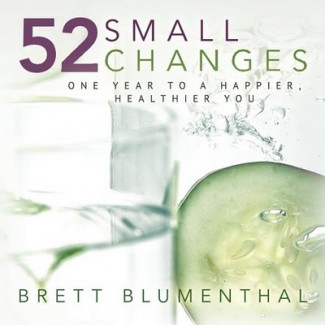
Book #13: 52 Small Changes: One Year to a Happier, Healthier You by Brett Blumenthal
I was babysitting at someone's house and saw this book on my friend's side table, and thought it sounded compelling enough to check out at the library. I love thinking about resolutions (even though I've got about a 50% success rate) and this whole book was about different healthy resolutions you should work on! The author is apparently a wellness coach, so theoretically should know what she's talking about. The resolutions all have to do with diet, fitness, mental health, or environmental changes you can make to be calmer, happier, and healthier. I really enjoyed reading all of the changes (or suggestions, as I was thinking of them), and it felt good reading them because I feel like many of them I've already implemented into my life (like drinking enough (or at least more) water or walking more). Many of the changes are the regular resolutions you always think of--eat more veggies, exercise more. But I really think that the author needs to fix her definition of a "small change" because a lot of the changes were actually really intimidating--like eat five servings of vegetables a day in a variety of colors. Seriously? I feel like we're relatively healthy eaters, but it's really hard for us to get more than two servings of vegetables every day (if I'm being totally honest). For the average person, trying to eat five servings of vegetables is a HUGE undertaking--the author would have been better to suggest adding just one more serving of vegetables every day to what you already eat or something like that.
Thursday, March 7, 2013
Book #12: The Casual Vacancy by J.K. Rowling
Like everyone else in the world, I read this book just because it was written by J. K. Rowling. But I guess that that's why most people read most books--because they've read other things written by the author that they've enjoyed. And I was not disappointed in this book! It definitely turned into a page-turner. I couldn't put it down yesterday after I really got into it--I finally powered through it at 10:30 last night and then got up to finish the dishes.
The book is the story about a local election in a tiny little hamlet in England, and the way that people get worked up and involved in it in the community. It's a funny topic in one sense for me, since I've never thought about local politics in my life. But I really loved how Rowling used so many different characters to tell the story--every chapter was told from a different perspective and you feel like you get to know all of the people really well. I ended up feeling sorry for almost everyone in the story, in one way or another, even when they were pretty despicable or obnoxious characters (except for Fats--I never felt sorry for him; his cyber-bullying was enough to make me hate him). Rowling is a great storyteller and she creates these great characters. I also really loved reading all the little things that told how this book was set in England, which I kept forgetting until I'd run across words like "parish councillor" or "my mum" or something like that. That made it pretty fun to read.
The cons of this book: lots of swearing (which I feel bad reading while I'm holding Dane, haha--like I don't want it to rub off on him), and lots of depressing lives people are leading. Even when the characters are well-off, they always have sad stories or hidden pasts that haunt them or mess up their futures. I don't think this is necessarily the point of the book, but I can't help feeling so sad when I read about people who are so unhappy or just in such messed-up lives--because even though this is fiction, of course there are plenty of people who are living like this. People who have abusive spouses, cut themselves, are drug addicts, are cyber-bullied. It sounds cheesy, but it makes me grateful for my small, happy life and for the gospel.
All in all, I liked it. I think a great way for me to tell if I really enjoyed a book is if I get sucked in and have to keep reading it once I'm a third or halfway through--and I definitely did with this one. Also, if I keep thinking about the story once I've finished (a reading hangover, I've seen it called), it means it was a really great story--and that's happened with this one too. Well done, J. K.
The book is the story about a local election in a tiny little hamlet in England, and the way that people get worked up and involved in it in the community. It's a funny topic in one sense for me, since I've never thought about local politics in my life. But I really loved how Rowling used so many different characters to tell the story--every chapter was told from a different perspective and you feel like you get to know all of the people really well. I ended up feeling sorry for almost everyone in the story, in one way or another, even when they were pretty despicable or obnoxious characters (except for Fats--I never felt sorry for him; his cyber-bullying was enough to make me hate him). Rowling is a great storyteller and she creates these great characters. I also really loved reading all the little things that told how this book was set in England, which I kept forgetting until I'd run across words like "parish councillor" or "my mum" or something like that. That made it pretty fun to read.
The cons of this book: lots of swearing (which I feel bad reading while I'm holding Dane, haha--like I don't want it to rub off on him), and lots of depressing lives people are leading. Even when the characters are well-off, they always have sad stories or hidden pasts that haunt them or mess up their futures. I don't think this is necessarily the point of the book, but I can't help feeling so sad when I read about people who are so unhappy or just in such messed-up lives--because even though this is fiction, of course there are plenty of people who are living like this. People who have abusive spouses, cut themselves, are drug addicts, are cyber-bullied. It sounds cheesy, but it makes me grateful for my small, happy life and for the gospel.
All in all, I liked it. I think a great way for me to tell if I really enjoyed a book is if I get sucked in and have to keep reading it once I'm a third or halfway through--and I definitely did with this one. Also, if I keep thinking about the story once I've finished (a reading hangover, I've seen it called), it means it was a really great story--and that's happened with this one too. Well done, J. K.
Monday, March 4, 2013
Book #11: Pride and Prejudice and Zombies by Jane Austen and Seth Grahame-Smith
This is also a re-read (but from before I started keeping a blog), but someone recently gave me a copy and I couldn't help but read through it again. I actually liked this one a bit less the second time I read through, but not because I don't LIKE it (if that makes any sense; I'm not even going to try and edit this because baby boy is waking up from his nap right now) but more because it's not as delightfully surprising as it was the first time when I read it. The first time I kept being so surprised every time zombies came up, and laughing at how many ways they were inserted into the storyline. This time, I remembered a lot of the plot and knew what was going to happen, so that added element was missing this time around. Also, last time I listened to the book as an audiobook, and I think that really made a difference as well. It was a GREAT audiobook because I couldn't skip ahead or see what was coming or anything, and that made that element of surprise even greater. Still a hilarious book though!
Book #10: The Happiness Project by Gretchen Rubin
I've already read this book, but I was supposed to select a new book for our ward book club for the month of March and I was racking my brains trying to think of something people might like to read (and not feeling sure that my random reading habits would appeal to everyone), and I suggested this one, and it was agreed on. Since I'm hosting book club and technically "in charge," I thought I should re-read it to be able to ask some questions and lead discussion. And I think I actually liked it even better the second time around. The first time I got a little bored in the later chapters, I think, but this time since I knew what to expect it didn't bother me so much. I still really like her idea and her approach, and I did go visit her website to see what else she's been up to. I downloaded one of her resolution charts and I'm going to come up with some resolutions for the month of March (I know it's already started, but better late than never!). Still, though, I'm totally overwhelmed by how much she does in her book. Not only the resolutions that she accomplishes (or tries to), but the things she does in her regular, everyday life (like how many books she reads, how many things she does professionally). It makes me feel like I do NOTHING (which maybe is true, but I feel like I do about the same as a lot of other people in similar life situations!). I want to adopt many of her resolutions as well.
Thursday, February 21, 2013
Book #9: Make the Bread, Buy the Butter by Jennifer Reese
I am kind of debating over whether this book even counts as me having "read" it, since it's half a cookbook, but I really, really like the concept behind it so I'm going to count it. Reese chooses a bunch of foods that we consume regularly and tells you whether you should feel guilty about buying them store-bought or if it's worth making them at home. She tells you how much the cost comparison is between homemade and store-bought, and how much the hassle is of making it, and whether she thinks it's worth it. A problem is that she ends up saying that you should make a lot of things, even after she goes on and on about what a hassle they are (which doesn't really make them sound super inviting). But I guess she's a foodie, and it's worth it to her (and let's be honest: a really well-made bagel is worth it to me too, even if it is way more work than buying it), so I guess forewarned is forearmed (or whatever that saying is). She presents recipes for most of the items that she says you should make or make/buy, and I'm really dying to try some of them (like a bagel recipe!). A lot of the things she posts about I would never consider making from home anyways (like cheese--maybe in my next life or when I run out of things to do, ever), so a lot of her recommendations aren't really that useful, but the whole book is still a really great idea. I'm totally keeping this book from the library for a while to try some of the recipes.
Monday, February 11, 2013
Book #8: Emma by Jane Austen
Emma has always been one of my least favorite Jane Austen novels, although every time I finish reading it, I'm not quite sure why. I always love it once I do read it. Maybe it's because I hate the shame of the several bad mistakes that Emma makes throughout the novel--because they're not horrible sins or anything, but they are real-life person mistakes that anyone could or would be tempted to make in her same situation. The shame and the regret she feels after she's impatient to Miss Bates is real, and I feel it just as much as she does, and it reminds me of how awful it feels to do that same thing. So I suppose that's a sign of how well-written a novel it is, that it makes me so uncomfortable that I don't like it--even in such a little matter as that.
Emma Woodhouse is also one of the most complicated heroines that Jane Austen writes, I think. Fanny and Anne are not exactly anyone too exciting--they're quiet and well-mannered and GOOD girls; Elinor and Marianne are kind of character types of themselves (one's sensible, one's sensitive); Elizabeth Bennet is witty and beautiful and altogether very sure of herself but very aware of her faults (to a point, I guess). But Emma Woodhouse ("handsome, clever, and rich") is a good person--she does charity work for the poor, she is kind to the people in her father's circle, even those that annoy her, etc.--but she really is insufferable and spoiled because she knows that she's a good person (and that she's handsome, clever, and rich, like the first line says). Mr. Knightley is the only person who sees any faults in her and tells her so, and he is, of course, right all along. I love how she evolves as a character over the course of the book--she humbles herself to take Mr. Knightley's advice and rebuke after how she offends Miss Bates. She also recognizes the mistakes her pride has made her make with regard to Harriet at the end of the book, and wishes she'd listened to Mr. Knightley's advice about her all along. I think that's the key to her character change all along--she learned to humble herself and recognize her faults and mistakes more honestly. She grows up, really.
The one thing that drives me CRAZY about this book is Mr. Woodhouse. Why is he so annoying? And why is everyone else so nice to him about it? Why are they always talking about draughts and catching cold if you get a little bit rained on? He's obviously a hypochondriac (or something of the sort) but they're always so nice to him--the only person who ever responds to him in a logical, rational manner is Mr. John Knightley, Emma's sister's husband, who offends Emma so badly when he tells Mr. Woodhouse to stop talking about that. But oh, well. It's a little thing, and it's part of the humor of the book (and it's also very telling about Emma's character that she's so devoted to her father anyways).
Emma Woodhouse is also one of the most complicated heroines that Jane Austen writes, I think. Fanny and Anne are not exactly anyone too exciting--they're quiet and well-mannered and GOOD girls; Elinor and Marianne are kind of character types of themselves (one's sensible, one's sensitive); Elizabeth Bennet is witty and beautiful and altogether very sure of herself but very aware of her faults (to a point, I guess). But Emma Woodhouse ("handsome, clever, and rich") is a good person--she does charity work for the poor, she is kind to the people in her father's circle, even those that annoy her, etc.--but she really is insufferable and spoiled because she knows that she's a good person (and that she's handsome, clever, and rich, like the first line says). Mr. Knightley is the only person who sees any faults in her and tells her so, and he is, of course, right all along. I love how she evolves as a character over the course of the book--she humbles herself to take Mr. Knightley's advice and rebuke after how she offends Miss Bates. She also recognizes the mistakes her pride has made her make with regard to Harriet at the end of the book, and wishes she'd listened to Mr. Knightley's advice about her all along. I think that's the key to her character change all along--she learned to humble herself and recognize her faults and mistakes more honestly. She grows up, really.
The one thing that drives me CRAZY about this book is Mr. Woodhouse. Why is he so annoying? And why is everyone else so nice to him about it? Why are they always talking about draughts and catching cold if you get a little bit rained on? He's obviously a hypochondriac (or something of the sort) but they're always so nice to him--the only person who ever responds to him in a logical, rational manner is Mr. John Knightley, Emma's sister's husband, who offends Emma so badly when he tells Mr. Woodhouse to stop talking about that. But oh, well. It's a little thing, and it's part of the humor of the book (and it's also very telling about Emma's character that she's so devoted to her father anyways).
Subscribe to:
Posts (Atom)