I read Donaldson's first book, Edenbrooke, about a year ago, and thoroughly enjoyed myself. I'd heard she'd come out with another book (not a sequel, but a similar period romance) and I kept meaning to read it but only finally got it from the library this week. I read it in about two hours last night because I couldn't put it down! (Tommy's probably never very thrilled when I pick up a new book, because it means I'm going to ignore him until I'm done. But I finished this book so early we still had time to watch a move afterwards.)
There were a lot of points about Edenbrooke that I didn't believe or like that much, but I didn't necessarily feel that way about Blackmoore. I felt like the romance was much more natural and sweet, and that Kate was a very sympathetic heroine. Kate has a crazy, dysfunctional family (think Mr. and Mrs. Bennet a billion times worse and without any sense of morality at all) and she is determined to prove that she is different from them, and wants nothing more than to go to India with her aunt Charlotte (who has invited her). Her saving grace her whole life has been her friendship with Henry and Sylvia Delafield, her neighbors, who spend every summer at Blackmoore, their grandfather's estate by the sea. When she finally gets invited to go with them, her mother tells her she can only go if she receives--and rejects--three proposals of marriage while she's there. Kate enlists the help of Henry and all sorts of romantic adventures ensue. I liked how the author used flashbacks to help explain why Kate acts the way she does and why there are all these hang-ups between her and her friends. And honestly, I loved Henry and think it's a little ridiculous that Kate couldn't tell they were in love the whole time. It's prettttty obvious, girl.
A few other things: The ending was WAYYYYY too rushed! The entire rest of the book covers like a one-week period, with very little action except for between the heroine/hero, and then everything's resolved and they're in love within about five pages. I was really wanting MORE from their reunion scene--it really felt like a cop-out. Also, I feel like Donaldson makes very little effort to adjust her heroines and their assumptions to the time period in which she is writing. Kate seems really pretty modern, and the way they talk and act doesn't really seem to be in keeping with the time period. I also honestly couldn't tell what sort of family Kate came from (what class) by the first half of the book, although eventually she has a maid and seems comfortable with it, so that was a hint. I did like how Donaldson had a few extended metaphors running throughout the book and how those exemplified different things about Kate: about the Greek stories, the birds, and the music of Mozart and Faust (although, let's be honest, I think Donaldson might need a lesson in how to write metaphors that aren't so heavy-handed. Kate talks about that bird in the cage--and about being a trapped bird in a cage--SO MANY TIMES it is absolutely ridiculous). But Donaldson is LDS so the book is completely clean and really very well done.
Friday, September 5, 2014
Sunday, August 31, 2014
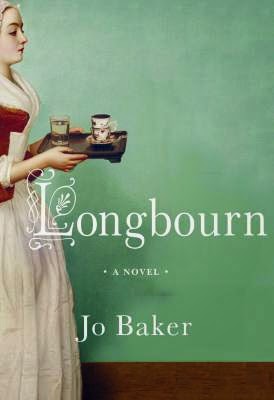
Book #65: Longbourn by Jo Baker
Yet another Jane Austen-related read! I heard about this in several places and was super interested. Longbourn is a look at Pride and Prejudice from the servants' perspective, but that really over-simplifies the scope of this book. Really, the story we know and love from P&P is only the bare bones of this story, the setting, while a completely individual story goes on in the downstairs section of the Bennet household. We meet a cast of characters that are mostly unnamed and unimportant in the original story--Mrs. Hill, the only servant named in the original story; Sarah, the housemaid; Polly, her younger assistant; Mr. Hill; and James, a new footman recently hired at Longbourn. Although we never hear anything about them or what they do in the original story, they have actual thoughts and lives and interesting histories, and it's really neat to see how the story plays out and how the actions of the Bennet family are received and taken by the servant class. Mostly, the servants are interested in what's going on upstairs by how it will affect them and their workloads; Elizabeth deciding to walk the three miles to Netherfield through the fields is no longer a charming independent gesture but one that will cause hours of soaking and laundering and scraping to clean her boots and petticoats. It's obvious how inconsiderate and rude it was of Mr. Bennet to invite Mr. Collins there to stay without any prior announcement of his coming, considering the work it takes for the servants to get the room/house ready for visitors. But they have their own lives and interests too; Sarah, the main voice and character for the story, is dying to get out and see the world but little aware of how innocent and naive she is. She (eventually, in her own "pride and prejudice" romantic twist) has her own love story and gets to learn a little more about the world and life by traveling a little, and we learn a little about the Bennet sisters' drama along with her own.
I loved this look at the P&P story. I thought it was a good reminder that there are so many people and points of view who are basically ignored throughout the original story (and throughout history, obviously). It's funny how in this story, you can see how Lizzie and Jane are nice to the servants but also basically ignore them and don't think about things from their points of view at all. (For example: it's raining buckets one day and Lizzie and Lydia decide they need new decorations for their shoes, but it's raining too hard for them to walk into town, so they just decide Sarah can do it for them. So she has to walk into town and get completely soaked, just for these random "shoe-roses.") So this book is not just a P&P rewrite; it's a completely individual story that's set in the exact same place, and it was really, really good.
P.S. I don't feel like I've read that much this month, but I still made it through 10 books! I've already read more books this year than I did in all of last year. So far, 2/3 of the way through this year, I'm (ALMOST) 2/3 of the way through the goal of 100 books this year. I've never read that many in the last three years I've been keeping track, but maybe I will this year! We'll see.
I loved this look at the P&P story. I thought it was a good reminder that there are so many people and points of view who are basically ignored throughout the original story (and throughout history, obviously). It's funny how in this story, you can see how Lizzie and Jane are nice to the servants but also basically ignore them and don't think about things from their points of view at all. (For example: it's raining buckets one day and Lizzie and Lydia decide they need new decorations for their shoes, but it's raining too hard for them to walk into town, so they just decide Sarah can do it for them. So she has to walk into town and get completely soaked, just for these random "shoe-roses.") So this book is not just a P&P rewrite; it's a completely individual story that's set in the exact same place, and it was really, really good.
P.S. I don't feel like I've read that much this month, but I still made it through 10 books! I've already read more books this year than I did in all of last year. So far, 2/3 of the way through this year, I'm (ALMOST) 2/3 of the way through the goal of 100 books this year. I've never read that many in the last three years I've been keeping track, but maybe I will this year! We'll see.
Thursday, August 28, 2014
Book #64: The Silkworm by Robert Galbraith
I really enjoyed the first Robert Galbraith book Cuckoo's Calling, so when I heard another one was coming out I immediately got on the library waitlist (or I guess, I immediately did when we moved in to Frisco). (I just looked at the blog post I wrote for Cuckoo's Calling and I read the two books exactly a year apart. What a coincidence.) As soon as I started reading The Silkworm, I couldn't put it down. Yesterday evening was one of those where I ignored all my responsibilities and poor Tommy and just powered through this book. I was up until 1 a.m. but it was so worth it to just get through it.
I really like Galbraith's style (or, as we all know, J.K. Rowling's style) in this series. I love the character she creates for Cormoran Strike--he's the quintessential moody, mysterious (ish) detective with a very interesting past (illegitimate son of a famous rock star, crazy on-again off-again relationship with the most gorgeous woman in the world for 16 years, blew off his leg in Afghanistan). I also love the character of Robin, his assistant, who really wants to be more involved in the actual crime-solving aspects of her job, although I hate her fiance, Matthew (who hates her job and is jealous of Strike), and I don't necessarily like the hints of potential romance between Robin and Strike--I don't necessarily think they would go well together and I like how the series works with them separate as they are. And this mystery was a doozy. The wife of a temperamental novelist comes to Strike and asks him to help her find her husband, who's run away and hidden himself (which he's done before, a number of times). Strike agrees, although it's obvious she doesn't have any money to pay him, and it's not long before he finds the husband's body in a gory, unexpected murder scene. It turns out that his murder is written about in his last, unpublished novel, which only a few people have had access to. The police suspect and eventually arrest the wife, but Strike is sure it's not her--so the race is on between Strike and the police for more evidence to support their ideas. I really hadn't seen the ending coming, with how the murder was committed, although I did suspect who the murderer was (but there was still a very satisfying revelation scene of how everything happened at the end). VERY satisfying.
I read somewhere online that there are supposedly going to be seven Cormoran Strike novels eventually (or that Rowling supposedly has plans for at least seven) and I know I will be happy to read all of them. The only thing I didn't like about this book was the description of Owen Quine's novel that supposedly caused his murder, which was filled with gratuitous fantasy sex and violence and was pretty off-putting. . . but it was just a few pages within the whole rest of the book if you want to skip that. That part was really too "adult" for me and probably for most people.
I really like Galbraith's style (or, as we all know, J.K. Rowling's style) in this series. I love the character she creates for Cormoran Strike--he's the quintessential moody, mysterious (ish) detective with a very interesting past (illegitimate son of a famous rock star, crazy on-again off-again relationship with the most gorgeous woman in the world for 16 years, blew off his leg in Afghanistan). I also love the character of Robin, his assistant, who really wants to be more involved in the actual crime-solving aspects of her job, although I hate her fiance, Matthew (who hates her job and is jealous of Strike), and I don't necessarily like the hints of potential romance between Robin and Strike--I don't necessarily think they would go well together and I like how the series works with them separate as they are. And this mystery was a doozy. The wife of a temperamental novelist comes to Strike and asks him to help her find her husband, who's run away and hidden himself (which he's done before, a number of times). Strike agrees, although it's obvious she doesn't have any money to pay him, and it's not long before he finds the husband's body in a gory, unexpected murder scene. It turns out that his murder is written about in his last, unpublished novel, which only a few people have had access to. The police suspect and eventually arrest the wife, but Strike is sure it's not her--so the race is on between Strike and the police for more evidence to support their ideas. I really hadn't seen the ending coming, with how the murder was committed, although I did suspect who the murderer was (but there was still a very satisfying revelation scene of how everything happened at the end). VERY satisfying.
I read somewhere online that there are supposedly going to be seven Cormoran Strike novels eventually (or that Rowling supposedly has plans for at least seven) and I know I will be happy to read all of them. The only thing I didn't like about this book was the description of Owen Quine's novel that supposedly caused his murder, which was filled with gratuitous fantasy sex and violence and was pretty off-putting. . . but it was just a few pages within the whole rest of the book if you want to skip that. That part was really too "adult" for me and probably for most people.
Friday, August 22, 2014
Book #63: Bomb: The Race to Build--And Steal--the World's Most Dangerous Weapon by Steve Sheinkin
One of the book bloggers I follow gave this book such a glowing review that I didn't want to pass it up, so I ended up requesting it from the library. It's an interesting genre for me--it's a historical look at the atomic bomb race, but it's written for a younger audience, not children, but maybe young teens? But really, the only signal that this is for a younger audience is how Sheinkin explains people and events, in a way that readers who have no idea who they are or what happened would be able to understand. And, this history is much quicker to get through than it probably would be if it were for an adult audience. I could see this book being 450 dense pages if it were a normal non-fiction look at the atomic bomb race, but this was 250 pages and moved very quickly, but it still provided a ton of information and introduced all the main players and events in a really engaging way. So I kind of liked how it was shortened and thinned out, since I learned everything I wanted to about it and didn't feel like I had to be stuck in this big heavy book for days and days.
Sheinkin writes about three separate storylines in the book: how America worked to build the first atomic bomb, how America was trying to sabotage Germany's similar attempts to do the same thing, and how the USSR was trying (and succeeding) to steal all of America's secret plans for the atomic bomb. It was really neat to learn about the Norwegian rebellion groups who blew up the heavy water plant the Germans needed for their a-bomb testing, and to read about the Russian spies and collaborators who were trying to get a hold of someone in the Manhattan Project and what their techniques were. And crazy to learn about the people who gave over the a-bomb secrets to the Russians and why they did it! And, of course, devastating to read about the effects of the bomb in Japan and the psychological effects of that realization of what they'd created on the physicists who worked on the project. It's unbelievable how quickly they were able to create it, considering they only barely discovered that fission was possible in 1939, and they managed to create a working atomic bomb only six years later (with hundreds of scientists working non-stop on it for that time).
This was definitely a fascinating read, with plenty of historical information and lots of detail that kept me involved, but quick-paced and not too heavy. I'm really glad I picked it up!
Sheinkin writes about three separate storylines in the book: how America worked to build the first atomic bomb, how America was trying to sabotage Germany's similar attempts to do the same thing, and how the USSR was trying (and succeeding) to steal all of America's secret plans for the atomic bomb. It was really neat to learn about the Norwegian rebellion groups who blew up the heavy water plant the Germans needed for their a-bomb testing, and to read about the Russian spies and collaborators who were trying to get a hold of someone in the Manhattan Project and what their techniques were. And crazy to learn about the people who gave over the a-bomb secrets to the Russians and why they did it! And, of course, devastating to read about the effects of the bomb in Japan and the psychological effects of that realization of what they'd created on the physicists who worked on the project. It's unbelievable how quickly they were able to create it, considering they only barely discovered that fission was possible in 1939, and they managed to create a working atomic bomb only six years later (with hundreds of scientists working non-stop on it for that time).
This was definitely a fascinating read, with plenty of historical information and lots of detail that kept me involved, but quick-paced and not too heavy. I'm really glad I picked it up!
Thursday, August 21, 2014
Book #62: Jane's Fame: How Jane Austen Conquered the World by Claire Harman
I hadn't heard anything about this book--I just happened across it when Tommy and I were perusing at Half Price Books on our date night the other night. I saw the title and decided that I wanted it right then and there--because everything about Jane Austen is is right up my alley these days. It took me a few days to plow through it, because it wasn't fiction or a super-fast easy read that I couldn't put down, but it was definitely still interesting enough. Harman basically does a readership study of Jane Austen throughout the last two centuries and discusses how scholars have changed their views of her, how the popular culture have changed its view of her, and how the number of readers has varied over time. Her books were practically out of print around the time that she died almost 200 years ago, but through some excellent circumstances on Jane's behalf, she's still one of the most popular authors being read these days. Harman does an excellent job of compiling and translating scholarly works on the "divine Jane" and discussing how her popular persona has changed over the last two centuries, and I definitely found it interesting to see how over different decades people held different views of her. I think this was definitely an interesting read, and I would recommend it to people who've read other biographies of Jane Austen and want a deeper look into her life and writing history.
Book #61: The Care and Management of Lies by Jacqueline Winspear
I am a big fan of the Maisie Dobbs series by Jacqueline Winspear, so when my friend Loralee mentioned that Winspear had written a standalone novel about WWI, I decided I had to read it. It became available pretty quickly at the library, so I got the chance to read it faster than I thought I would. And it didn't disappoint! Winspear does a fantastic job of creating the world in which her characters live in WWI. I love how she focuses on this time in world history in all of her books. It is always mind-blowing to me how little I really know about that whole era, how little I've really learned about WWI in history classes throughout my life. The Maisie Dobbs books were some of the first to introduce me to WWI and the time period after the war, to really make me aware of how traumatizing and significant that experience was for everyone who lived at that time. Everyone, EVERYONE was affected by this war, which is so different than the wars that go on today.
This novel follows the love story of Kezia and Tom Brissenden, a brand-new married couple who settle in on Tom's family farm to live before the war breaks out and Tom leaves to fight in France. They are an adorable, wonderful couple, who are sweet and deeply in love with each other despite the fact that they have different backgrounds (town girl, country boy). When Tom leaves, Kezia is left in charge of the farm and has to learn to take care of it on her own, and she and Tom write each other long letters, in which what's left out is almost as important as what is left in. I loved the look at how Kezia and Tom both write their letters and self-edit to take out things that will worry the other or make them upset. (I almost want to use it as an example in my class; it's a fantastic look at how the rhetorical situation--the purpose of a letter and the audience of that letter--affects what you write and how you write it!) I loved also how Kezia would write long, detailed letters about imaginary meals she would make for Tom and how she prepared them, and how he would daydream about her food after reading her letters. There is also the side story of Tom's sister, or Kezia's best friend, Thea, and how she ended up at the front driving ambulances at the same time.
The one thing I didn't like about the book is the ending. No spoilers here--just in case--but it's not too difficult to imagine that it's not a fairy-tale happy ending (it's WWI, for heaven's sake). I don't know what I wanted to happen for the end, but it seemed a little sudden and not detailed enough to explain what really happened to everyone--and it wasn't the fairy-tale happy ending I wanted! But all in all, it was definitely a good read and I loved the angle Winspear took with this book.
This novel follows the love story of Kezia and Tom Brissenden, a brand-new married couple who settle in on Tom's family farm to live before the war breaks out and Tom leaves to fight in France. They are an adorable, wonderful couple, who are sweet and deeply in love with each other despite the fact that they have different backgrounds (town girl, country boy). When Tom leaves, Kezia is left in charge of the farm and has to learn to take care of it on her own, and she and Tom write each other long letters, in which what's left out is almost as important as what is left in. I loved the look at how Kezia and Tom both write their letters and self-edit to take out things that will worry the other or make them upset. (I almost want to use it as an example in my class; it's a fantastic look at how the rhetorical situation--the purpose of a letter and the audience of that letter--affects what you write and how you write it!) I loved also how Kezia would write long, detailed letters about imaginary meals she would make for Tom and how she prepared them, and how he would daydream about her food after reading her letters. There is also the side story of Tom's sister, or Kezia's best friend, Thea, and how she ended up at the front driving ambulances at the same time.
The one thing I didn't like about the book is the ending. No spoilers here--just in case--but it's not too difficult to imagine that it's not a fairy-tale happy ending (it's WWI, for heaven's sake). I don't know what I wanted to happen for the end, but it seemed a little sudden and not detailed enough to explain what really happened to everyone--and it wasn't the fairy-tale happy ending I wanted! But all in all, it was definitely a good read and I loved the angle Winspear took with this book.
Sunday, August 10, 2014
Book #60: Ella Enchanted by Gail Carson Levine
I know I've said this before on this blog, but I was a HUUUUUUGE re-reader when I was a kid. I would get on a kick and read a book hundreds of times with a few new books thrown in. Harry Potter was one of those re-readings, and Ella Enchanted was definitely another. I read this book so many times as a kid, but I haven't read it in over ten years, at least. But last night we were skimming Netflix and happened upon the movie, and I may or may not have made Tommy watch it with me--and that made me interested in revisiting the book. Luckily, our library had an e-copy I could download--which was actually the very first time I'd ever bothered to figure out how to download e-books to our Kindle, can you believe it?--and I read it today during Dane's nap. It reminded me of several things: 1) how much worse the movie is than the book (so cheesy! So silly!) and 2) how much I loved this book.
So anyways, I know this is a kid's book (or middle grades--not sure what genre/age group to throw it in here) and I don't usually write about them on here (again, other than Harry Potter) but I have such an affinity for this book that I didn't want to forget about it. I love how this is a re-telling of the Cinderella story with the added twist of Ella's spell of obedience that has been placed on her. I think it's so creative and it perfectly pleases the audience that Levine is writing for. Reading the book as an adult, there are elements that seem somewhat unbelievable (why do she and the prince run into each other so many times? Why does her father not care that she's being forced to work as a servant?) but it's still a great book that I fully intend to read with my kids (especially any girls if I ever have any).
Subscribe to:
Posts (Atom)


.jpg)