Monday, May 28, 2018

Dress Your Family in Corduroy and Denim by David Sedaris

This is my third and maybe final David Sedaris book that I'm going to listen to for a while. Not that I didn't enjoy them, because I did. They are especially funny to listen to, since he reads them and his voice is really distinctive and he does excellent accents for his siblings and places the emphasis on things so well (hopefully so, since he wrote these essays). Some of his essays were so funny I laughed out loud, and some were funny but also a mix of depressing. I feel like I should be able to explain it better, but he is so honest and up front about his family and his upbringing and the flaws in his family and himself that it makes me a little sad. He tells a story about when his dad said they would buy a beach home on the coast of North Carolina and how excited and happy his whole family was, but then his dad changed his mind and didn't want to spend the money on it and how disappointed all of the kids were and his mom. He tells it so well and I could feel all of their emotions, which makes it such a great story, but it was kind of gut-wrenching to sense all of their deep disappointment (especially the mom's).

I also couldn't listen to most of these stories without wondering how his family feels about how he portrays them. He doesn't just write about when they were kids in the seventies in North Carolina, but he writes about them today and seems like he exposes quite a lot about their lives and their relationships. He addresses this specifically in a few of his stories, but doesn't quite resolve it and I know that I definitely would not be happy if I were his sister and he were doing that to me. Mostly his essays expose more of his flaws and his realizations about himself, which he learns through his interactions with his sisters, but it still feels like a violation of privacy.

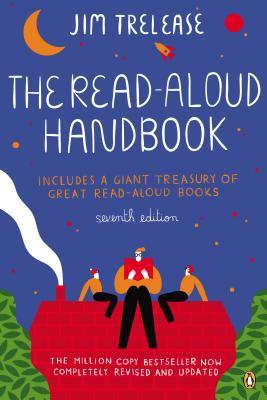
The Read-Aloud Handbook by Jim Trelease

I read The Read-Aloud Family a month ago and in it, she raves about this book as being the book that got her started in her adventure of always reading books aloud with her children. I'd already heard of this book years ago but never gotten around to it, but that book motivated me enough that I wanted to read this one too. Unfortunately, this book is not as good as The Read-Aloud Family, or at least, it has a different point and it wasn't as useful to me. This book seems to be written to convince people--possibly people in positions of power, like superintendents of a school district or at least teachers in a classroom--that reading to children is a silver bullet to help improve all sorts of test scores and every possible learning achievement you could want for your kids and your schools. This book is very heavily research-based and there were even chapters debating how harmful digital books and digital learning can be, and how television is detrimental to kids. I definitely agree with these things, but it didn't seem to fit in with what I expected to get out of this book and it wasn't useful to me, since I am already convinced that TV isn't good and we hardly watch any at all in our house. I thought some of it was very good, and I definitely enjoyed the book list at the end of the book with books to read, and I will be checking those out for sure. I am glad to have a copy to refer back to at different times (again, especially for the book list!), but I will definitely be skipping about half of the chapters and not needing to read those again.

Sunday, May 27, 2018

All-of-a-Kind Family by Sydney Taylor

Oh my goodness. I completely forgot that this book existed, and I have NO IDEA HOW I FORGOT ABOUT IT. I started reading it and it was like fireworks were going off in my brain on every page as it all came flooding back and seeming so familiar. I know I read this book dozens of times, because I knew every story and recognized every illustration, but for some reason the name of the book really doesn't seem that familiar to me. I don't remember it as a childhood favorite like I do Betsy-Tacy, for example. But I am so happy to have rediscovered it and I hope my kids want to read it too.

This book reminded me of a happy shiny version of A Tree Grows in Brooklyn, where the family isn't so desperately poor and the kids are happy and well-fed and nobody is assaulted or ever feels in danger. It's set around the same time period and in New York City, but the family in this story is Jewish so there is a lot of detail and information about how they celebrate Jewish holidays and go to the Jewish market. I vividly remember some of these stories, like when they are given a bunch of books from their father's junk shop and how they sit and go through them, deciding which ones they should take. Or when one of the girls loses her library book and they have to go apologize for it at the library. I just love, love this story of this sweet, happy family. I think I love these old-fashioned, long-ago stories because you get to learn about how things were 100+ years ago, but also they didn't have so many of the problems or annoying things that books written today have, like issues with kids being disrespectful to parents, etc. I am sure this is not great literature--the things that make it differ from A Tree Grows in Brooklyn, like it's happy shininess and ignorance of all the unpleasant aspects of life, probably knock it out of that category--but it's a perfect book for young children to read and I look forward to reading it with my kids.

Edited later: I read this to Dane a few months after reading it myself and he loved it. He asked if there were more books in the series after we finished, and I said there were, but we don't have them. And he begged me to get them. He especially loved how it ended with them getting a baby brother, and was so proud that he guessed what was happening. So definitely a good read together.

Saturday, May 26, 2018

A Bear Called Paddington by Michael Bond

I read this with Dane and I think he liked it more than I did. Paddington is a bear found at Paddington Station in London, and the Brown family takes him home and lets him stay with them. He gets into all sorts of scrapes and makes all sorts of messes but they love him so much they let him stay. (I'm not sure I understand that--I would definitely not have wanted him to stay at my house considering all the work he caused.) It was a cute story with some really cute episodes in it, like when Paddington goes backstage at a play because he thinks the villain really is bad and he needs to save the girl, or when he smashes the next-door neighbor's watch while trying to do a magic trick. (That one made me laugh out loud.) The only tricky thing for me with my audience was that the story was set in the 1950s, maybe? Not sure what time period--but it was long enough ago that I had to explain a whole lot of things to Dane, like why the photographer was going underneath a black cloth or what opera glasses are at a play. I wasn't sure if he was understanding everything even when I was explaining these things, but he still seemed to really enjoy it and was super excited about reading it every time we did. I didn't love it though and didn't really rush to read it so it still took us a while to get through.

Friday, May 25, 2018

Shoe Dog: A Memoir by the Creator of Nike by Phil Knight

I am not super interested in business-y books or in Nike specifically, but I felt like I kept hearing about this book and how good it was, so I figured I would check it out as an audiobook when I got the chance. And I actually really enjoyed it. Phil Knight talks about the early days of Nike, its beginnings as his "crazy idea" out of his MBA at Stanford and selling Japanese-made Tiger shoes out of the back of his car at track meets, and goes until 1980, when Nike went public and he became overnight a multimillionaire. It was so interesting learning about how this super, super-famous brand began so humbly and how it grew from this tiny beginning, and struggled for so many years to continue to grow and to make ends meet. I definitely don't think I could make it work as an entrepreneur--it sounds excruciatingly hard. But Knight makes it clear that the work he did was "play" and that they loved the work they did. I couldn't wait to find out what happened next to the intrepid Nike team as they made it through their beginning years--it really was a page-turner (although I was listening to it, so I'm not sure what the term would be for that).

The thing I especially liked about his memoir is that he was extremely honest and candid about his failures and mistakes that he made along the way. He was very upfront about his struggles as an introvert in the business world and the times he had to testify in court or deal with politicians, and he talked about stupid mistakes he made along the years too without trying to justify his actions. He also talked at length about his mistakes with his children, and his regrets that he didn't spend enough time with them while trying to build his company. This honesty was surprising at times and very refreshing--he doesn't seem like he's writing this book to explain himself or make himself look good at all. He actually talks about the movie The Bucket List and explains that this book is somewhat fulfilling one of the only things left on his bucket list--since he is worth billions of dollars by this time and has done everything he could have wanted to do (except for fix the things he regrets). It was very well done and very interesting--I kept thinking about it even when I wasn't listening.

I would be interested to get a feminist take on Knight's account of his company's beginnings, though--it was 100% male, 100% testosterone-driven. All of the top people were men handpicked by Knight for their thick skins and their abilities to jive with the team, and their informal team weekends where they would hash out important issues were called "Buttfaces" and they spent the whole time yelling at each other, drinking, and poking fun at each other. I cannot imagine any woman thriving in that atmosphere, and I am curious how much that has changed in the last forty years since the memoir ended. It was the sixties and seventies, though, so times have changed.

Wednesday, May 23, 2018

Many Waters by Madeleine L'Engle

This is the fourth book in the Wrinkle in Time series, although it really has nothing to do with A Wrinkle in Time except that it features the Murry family. It's extremely different from the first three, in which Meg and Charles Wallace are the main characters, and they get taken to weird worlds and times but are always based back at their home. In this book, however, Sandy and Dennys, their twin brothers, who are always preceded as the "logical and normal ones of the family," are accidentally swept away by an experiment of their dad's and get thrown back several thousand years to the time of Noah and the ark. They land in the desert and spend some time needing to recover from their severe sunstroke and figure out where they are, and in the process become close to Noah's whole family, including his father Lamech and his children who live with him, and they need to figure out how they will be able to get home.

I loved this look at the Noah story and the focus on the other characters that you don't hear about in the Bible story--namely the women. I felt like reading this book as a kid gave me a way better view of what it would have been like to live back then. I also really liked the magical/mythical creatures and people that lived at this time, like the seraphim and nephilim, and the mammoths and manticores, and I liked how L'Engle mixed this myth and history and even some science-fiction-y stuff in with it too (explaining how the twins got there and how they got home at the end of their time there). I think it's interesting re-reading this book now as an adult, because there is kind of a focus on sex, at least for Sandy and Dennys--they start off the book completely unaware of sex and totally innocent, and become kind of awakened to these possibilities as they are treated like adults and tempted by people there. It's definitely a clean book--but the possibilities are there and Sandy and Dennys think about them for the first time. The conclusion seems to be that having sex is something important and should only be done at the right time with the right person and not just wantonly, which I think is a good message for most people, especially the young audience who this book is written for (although obviously I would generally go a little farther than that). Overall, I still really enjoyed this book. It kind of reminded me of The Red Tent because of its Old Testament rewrite sort of style, although it was meant for a much younger audience than that one.

Monday, May 21, 2018

The Handmaid's Tale by Margaret Atwood

I've meant to read this book for forever, and now that it's a Hulu series I've heard more and more about it. I haven't watched the show at all, but I guess its increase in popularity has given me more motivation to read the book because I finally got around to it.

This book is about a creepy dystopian future (or actually, now it's probably in the past since this book was written in the 80s or 90s) where this small group of religious nutjobs has taken over the country and implemented super strict Old Testament rules over society. This means that women are not given any power or choices, and they are known simply by their husband's names. Most people are infertile and so there are women who are known as handmaids, who are basically there to try and get pregnant to increase the incredibly low birth rate. The book is told from the perspective of Offred, a handmaid, who tells about her past from before everything changed, and what has happened to her since then.

I had to read this in a few chunks because it was a little bit scary. Scary in the Brave New World and 1984 senses--like this is a dystopian future that seems slightly possible, and even if it's not totally likely, there are some aspects of it that could happen if we are not careful. Like the country being taken over by a really crazy uber religious minority and imposing a completely different set of rules over the country? Not likely, but look what happened to Afghanistan. Decades ago, women were allowed to walk around on their own and wear whatever they wanted, but the Al-Queda took over the government and took away all freedoms that women had had before then. That's what I kept thinking while reading this book--I wanted to complain that it is totally impossible that all of these changes could be implemented within one person's lifetime, that this woman could remember the time Before but still be living in this world as it is now (kind of my complaint about Ready Player One), but aspects of this literally happened in Afghanistan. That's what made this so scary to me.

However, it felt like Atwood kind of dropped the ball on the world-creating aspect of her job. She never really described why or what happened--she says vaguely that the President and Congress were all killed and there were never new elections, but she never really explains who did it or why, and although you know it's just the nebulous "they" who are in charge now, I really wanted to know more about it. I think that's something that we are more used to with these dystopian novels now--there's always spot where the narrator gives you a clear-cut explanation for what's happened and how it happened, and it really didn't happen in this book. It seemed like an oversight to me as the reader. I also kind of hated reading about her past with her husband and daughter and how they got taken away from her--but that's just a personal qualm because I hate any sort of storyline that affects children negatively.

But the book definitely made me think about these possibilities--I couldn't stop thinking it over after finishing it this afternoon. I was reading the Wikipedia page about the book and read about how many people classify this book as science fiction but Atwood doesn't like that classification--she argues that it's speculative fiction, because it's something that really could happen and isn't just based on technology in the future. I definitely don't see this book as a science fiction, and I like her thoughts about it. I feel like I have many more half-baked thoughts about this book and its real meaning, but it's been a long day and I don't want to spend all night writing this up so I'll leave it here.